
Athenum Analytics
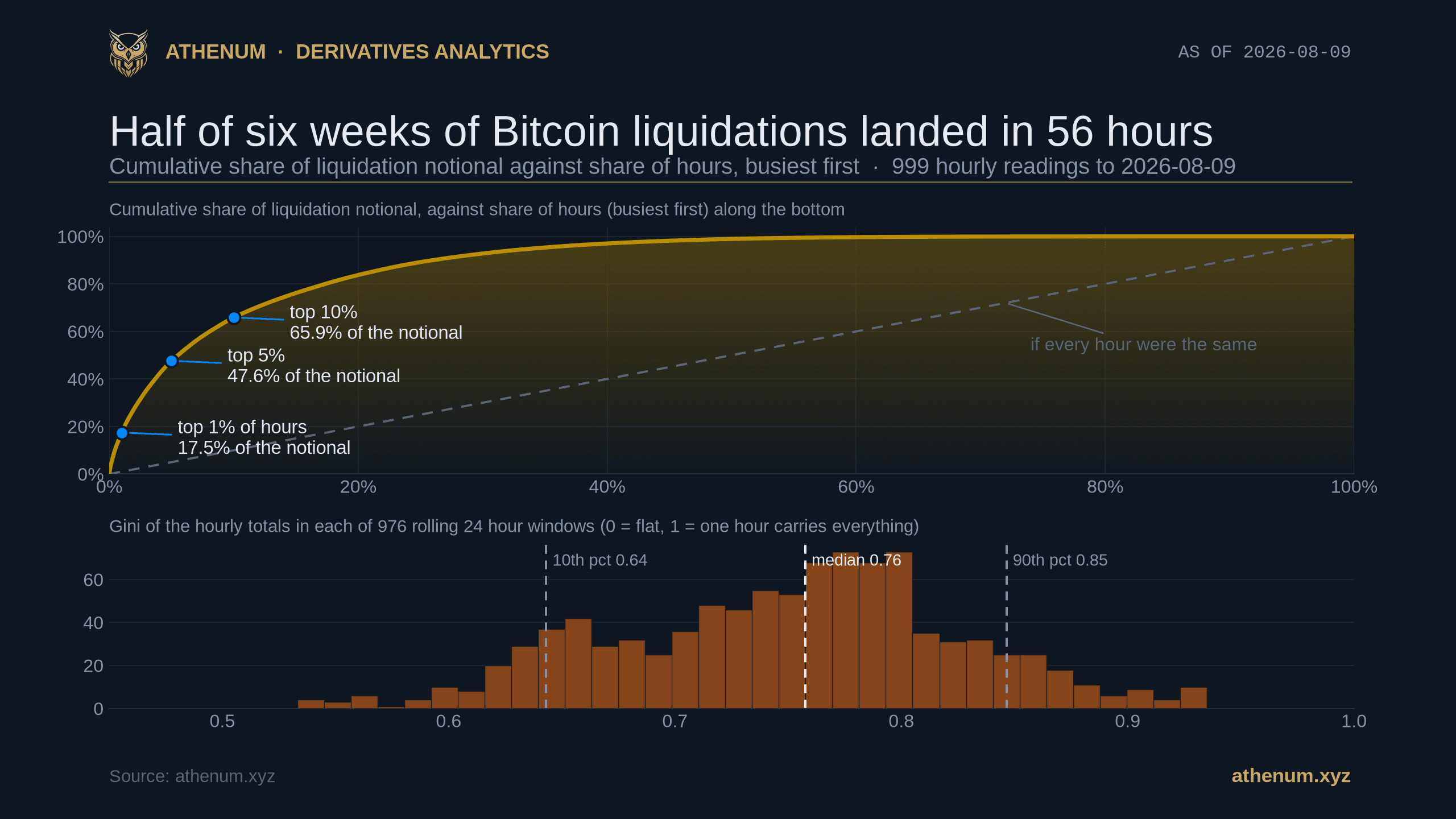
Thanh lý Bitcoin theo giờ: một nửa của sáu tuần dồn vào 56 giờ
Thanh lý Bitcoin không đến đều đặn. Trên 999 phiên đọc theo giờ đã hoàn tất tính đến 2026-08-09, một nửa toàn bộ giá trị danh nghĩa dồn vào 56 giờ, một phần tư dồn vào 18 giờ, và 1% số giờ bận rộn nhất gánh 17,5%. Giờ trung vị là 113.170 USD so với mức trung bình 925.105 USD, tỷ lệ 8,2 trên 1, và 12:00 đến 15:00 UTC gánh 38,0% giá trị danh nghĩa. Còn giờ tệ nhất trong ngày thì chưa được xác lập.
 Athenum Analytics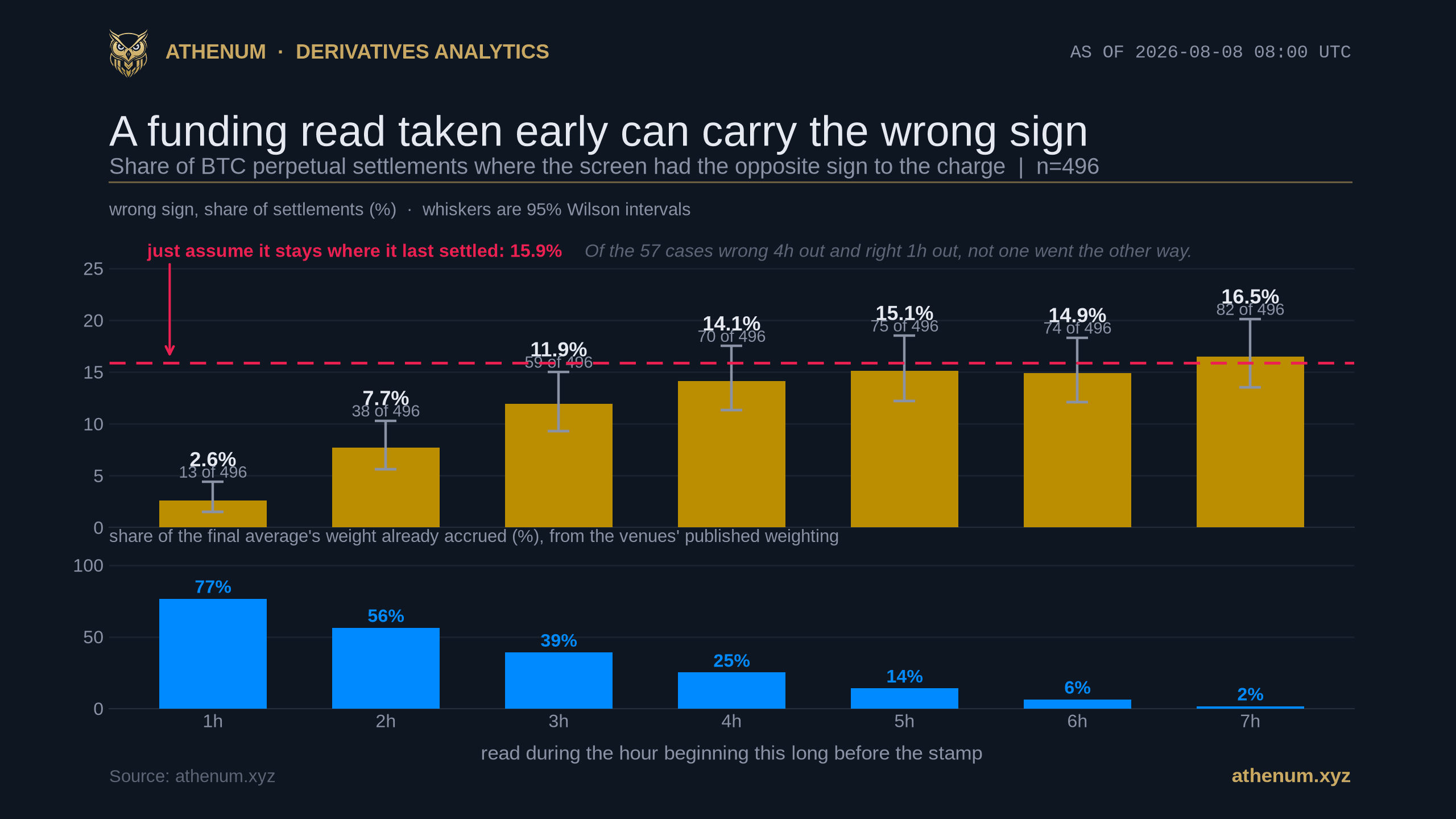
Tỷ lệ funding Bitcoin chỉ thắng lần thanh toán trước trong ba giờ cuối
Tỷ lệ funding một sàn hiển thị trước khi thanh toán là một trung bình động, không phải tỷ lệ nó sẽ tính. Qua 496 lượt thanh toán hợp đồng vĩnh cửu Bitcoin theo sàn tính đến 2026-08-08, một lần đọc lấy trước bốn giờ không hơn gì việc giả định tỷ lệ vẫn nằm nguyên chỗ đã thanh toán lần trước. Màn hình chỉ bắt đầu tách ra trong vòng ba giờ.
Athenum Analytics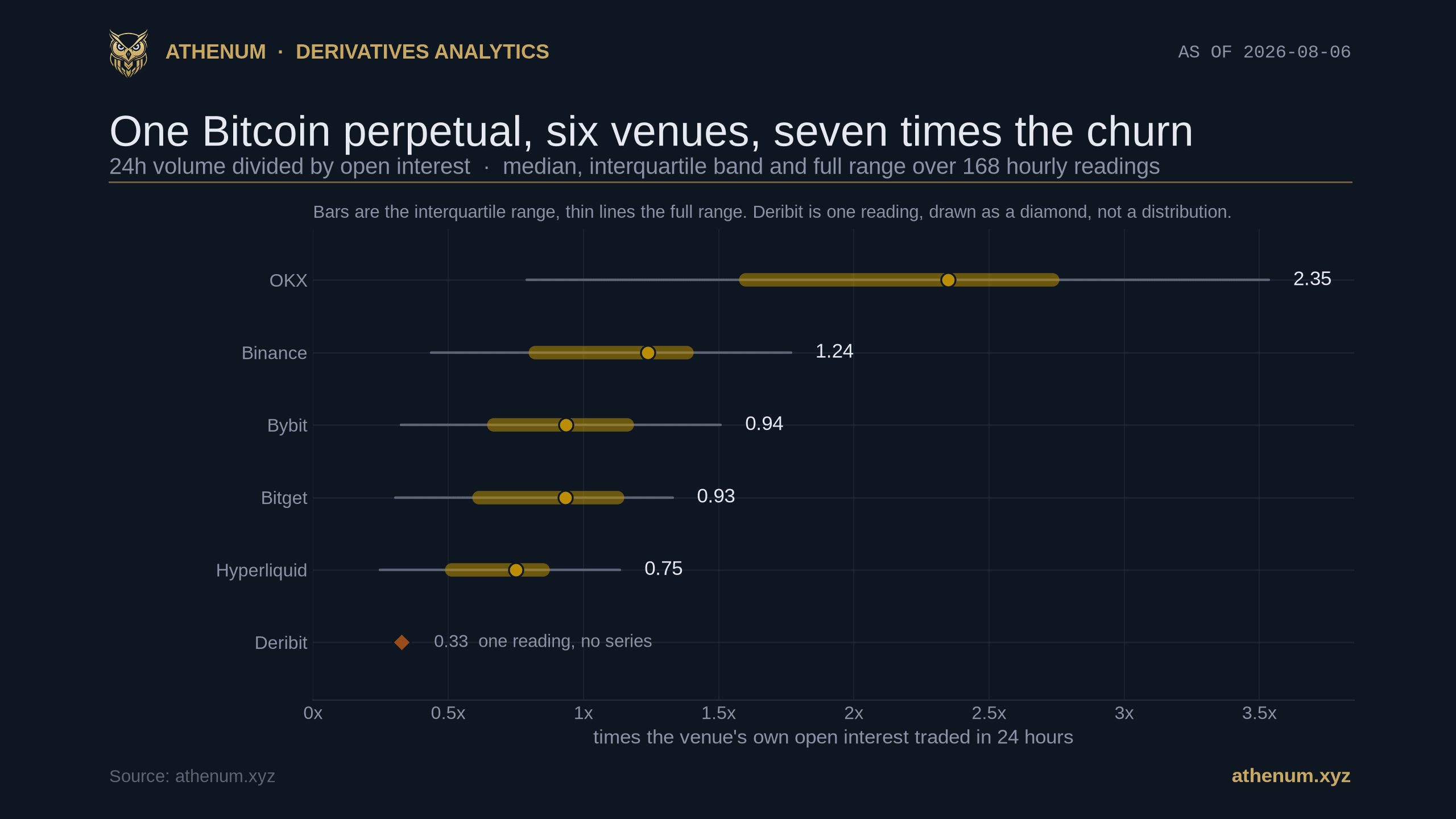
Vòng quay hợp đồng vĩnh cửu Bitcoin ở OKX nhanh gấp ba Hyperliquid
Vòng quay là giá trị danh nghĩa khớp trong một ngày chia cho hợp đồng mở vẫn còn trên sổ. Áp cho cùng sáu hợp đồng vĩnh cửu Bitcoin, các câu trả lời trải rộng gấp bảy lần, hai sàn ở giữa hoàn toàn không tách rời được, và trường hợp đồng mở của chính một sàn làm kết quả của nó gấp đôi.
Athenum Analytics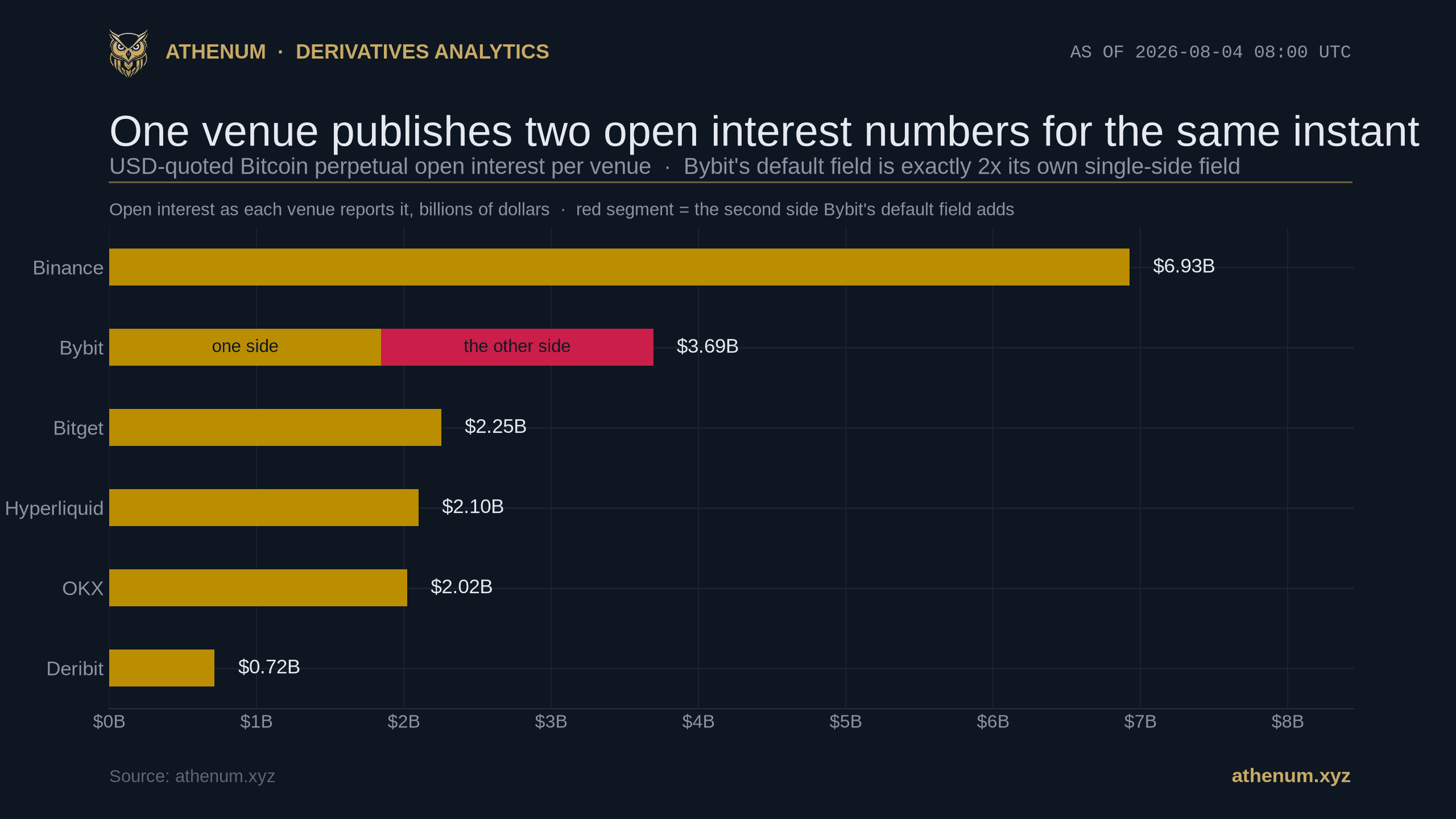
Hợp đồng mở tính một chiều hay cả hai, và phần lớn các sàn không nói rõ
Mỗi hợp đồng tương lai có một vị thế mua và một vị thế bán, nên một sàn có thể báo cáo vị thế đang mở một lần hoặc hai lần, và cả hai đều có lý. Vấn đề không phải là các sàn im lặng. Vấn đề là hai sàn có nói đều nói họ đếm hai lần.
Athenum Analytics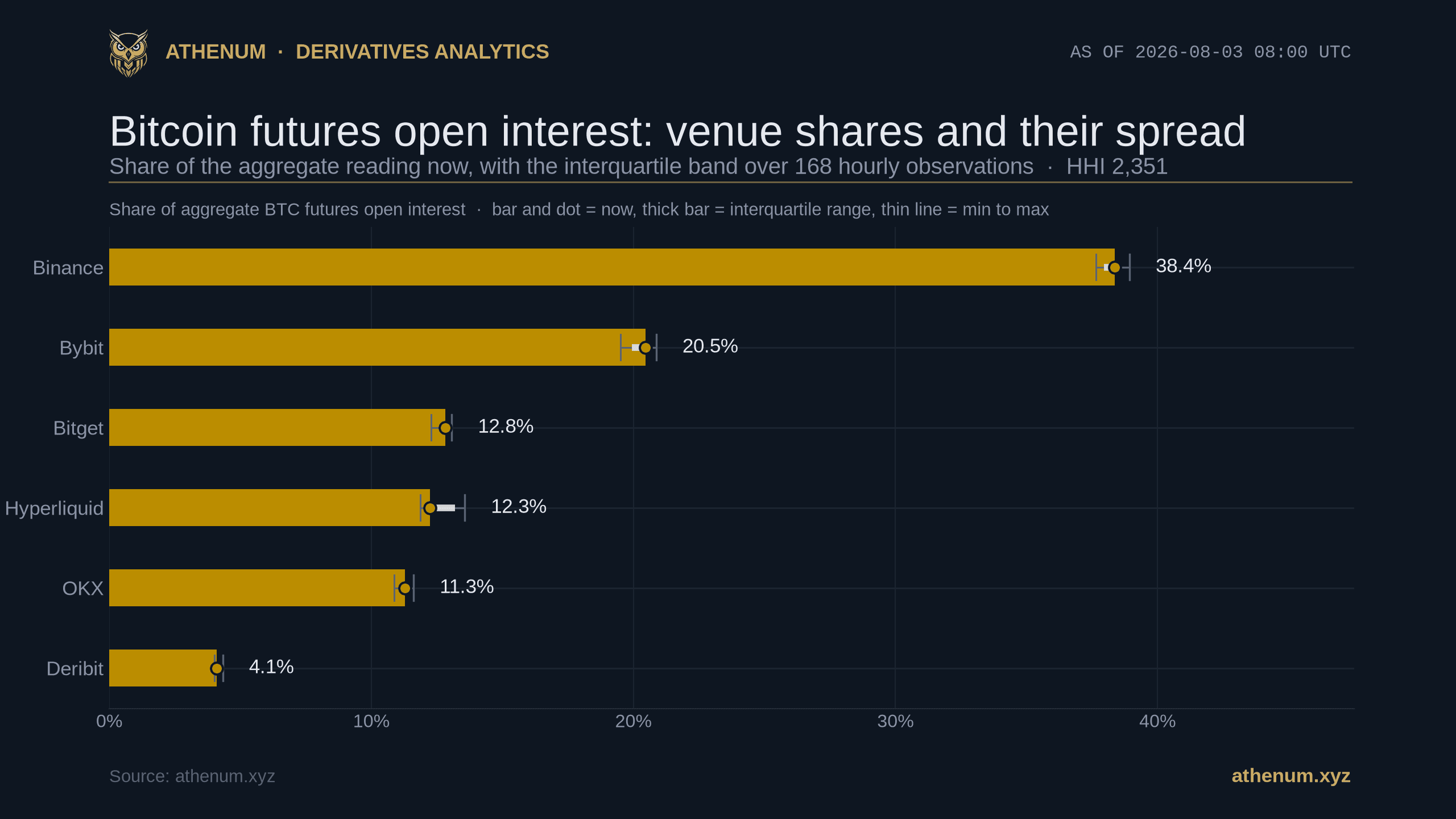
Mức tập trung open interest Bitcoin: HHI nói gì về rủi ro sàn giao dịch
Cùng một giờ dữ liệu ngày 2026-08-05 cho chỉ số 2,376 nếu cả sáu sàn đếm hai vế và 2,552 nếu chỉ Bybit đếm hai vế. Bằng chứng công khai không đủ để chọn giữa chúng, nên bài viết đưa ra cả khoảng giá trị thay vì một con số duy nhất.
Athenum Analytics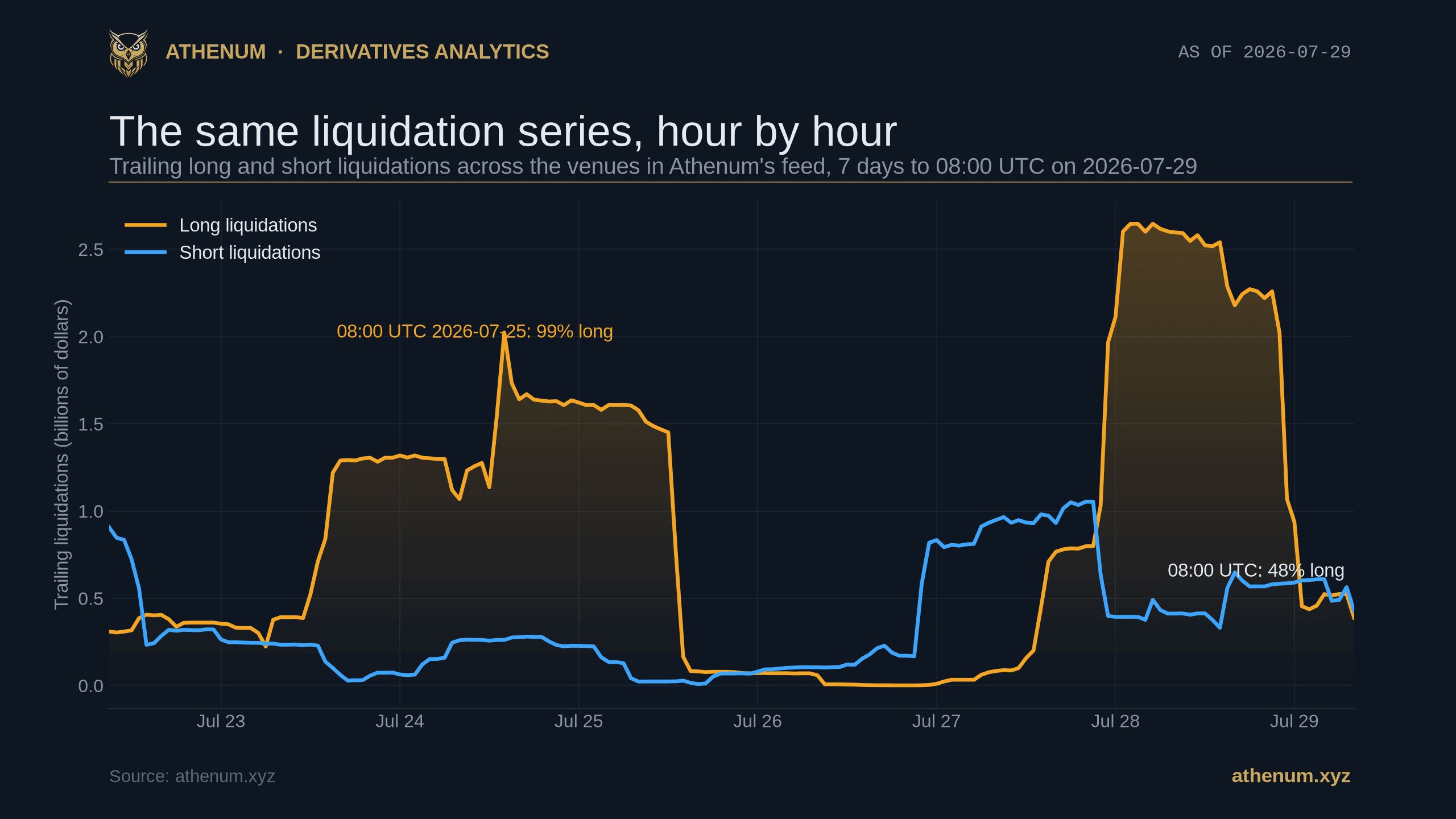
Dữ liệu thanh lý crypto: vì sao con số được báo cáo là mức sàn, không phải tổng số
Tổng thanh lý là một phép đo chứ không phải sự thật, và ít nhất một sàn lớn ghi rõ rằng luồng dữ liệu của họ chỉ đẩy một lệnh mỗi cặp mỗi giây. Con số đó đếm gì, bỏ đi những gì, và các bước kiểm tra khiến nó dùng được.
Athenum Analytics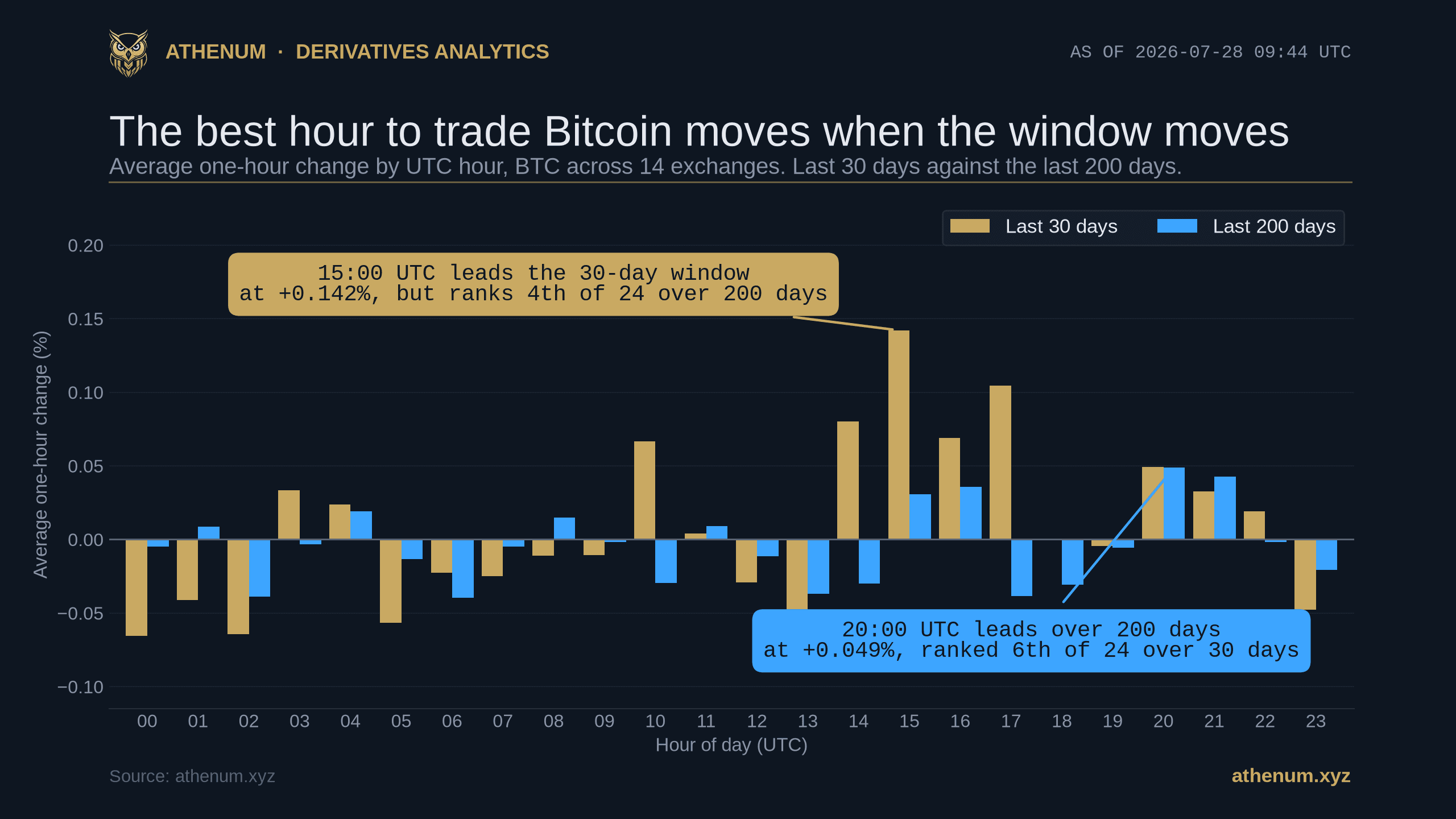
Giờ giao dịch tiền mã hóa: giờ UTC nào làm Bitcoin biến động và giờ nào chỉ là nhiễu
Biểu đồ theo giờ nào cũng có một giờ tốt nhất. Đổi cửa sổ thì giờ đó cũng đổi theo. Đây là chiếc đồng hồ UTC của Bitcoin đo theo hai cách, kèm phép kiểm cỡ mẫu cho biết phần nào trong đó dùng được.
Athenum Analytics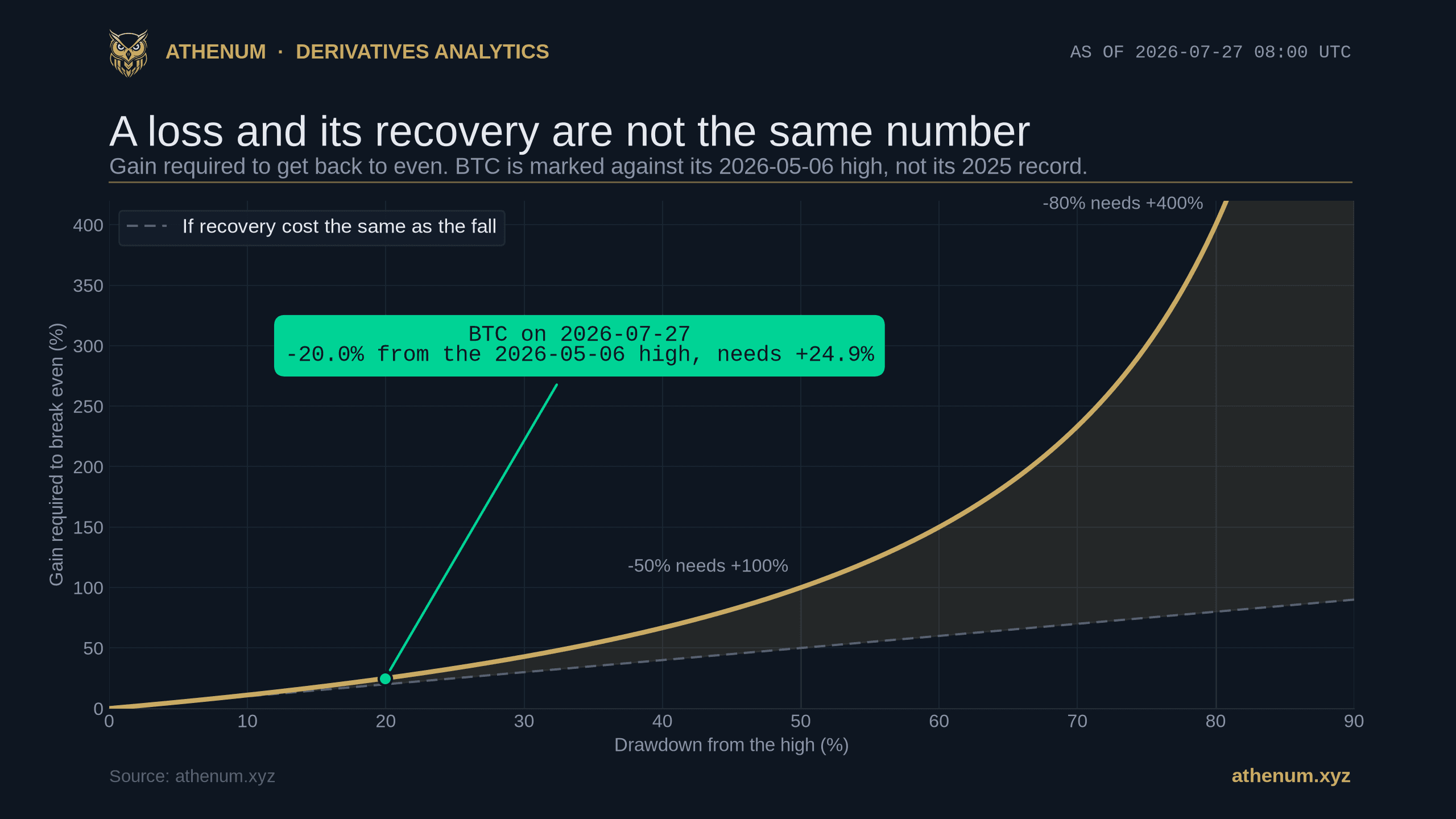
Toán học mức sụt giảm crypto: vì sao lỗ 50% cần tăng 100% để hòa vốn
Phục hồi một mức sụt giảm luôn tốn hơn chính mức sụt giảm đó, và đòn bẩy nới rộng khoảng cách cho tới khi thanh lý kết thúc nó. Đây là toán học phục hồi, đo trên chính mức sụt giảm trực tiếp của Bitcoin.
Athenum Analytics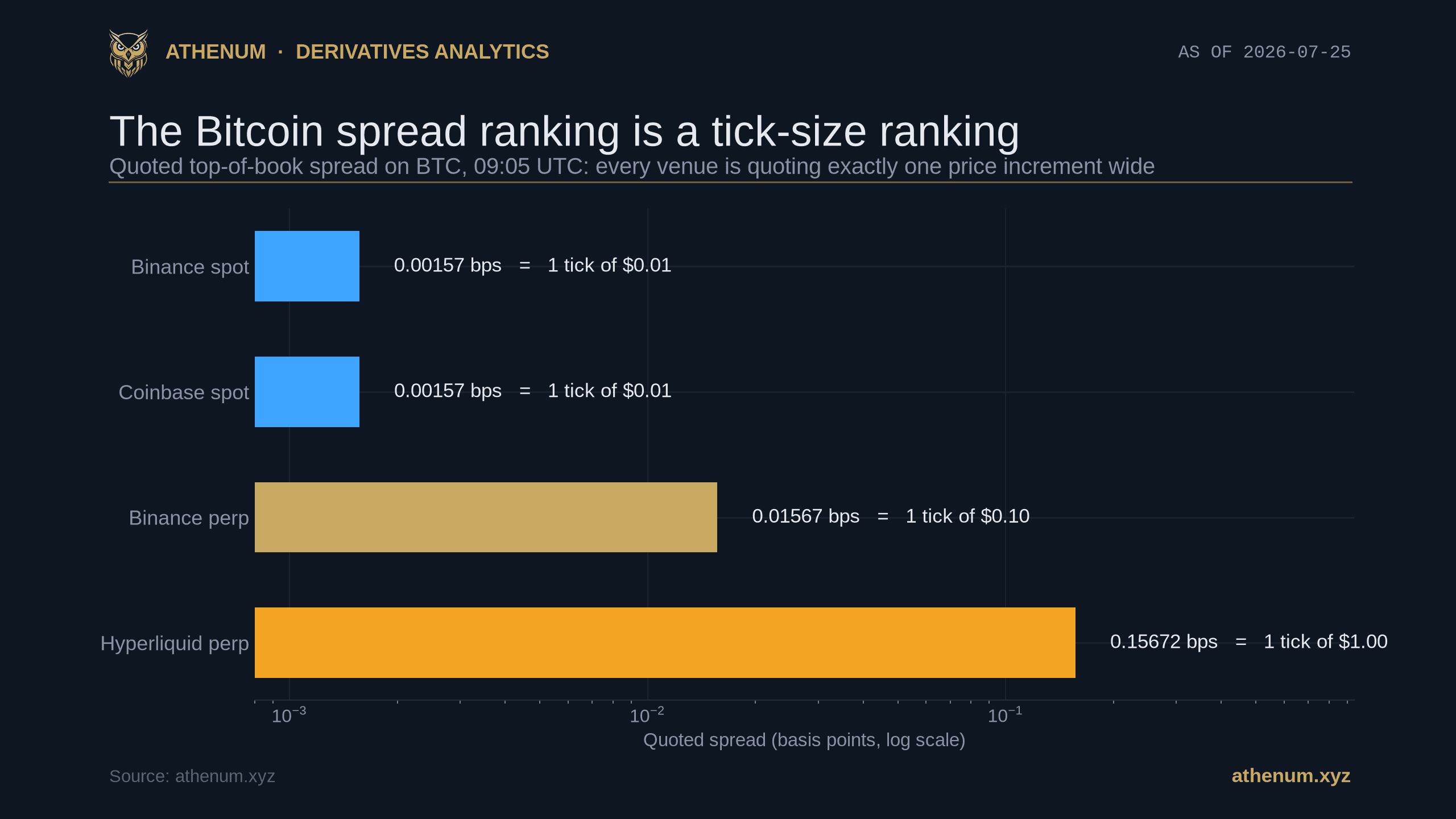
Spread mua bán crypto: vì sao mức niêm yết hẹp nhất chỉ là tick nhỏ nhất
Spread niêm yết trên một sổ lệnh crypto có độ sâu lớn gần như luôn rộng đúng một tick, khiến việc xếp hạng spread giữa các sàn trở thành xếp hạng kích thước tick. Đây là bằng chứng trực tiếp và hai con số nên đọc thay thế.
Athenum Analytics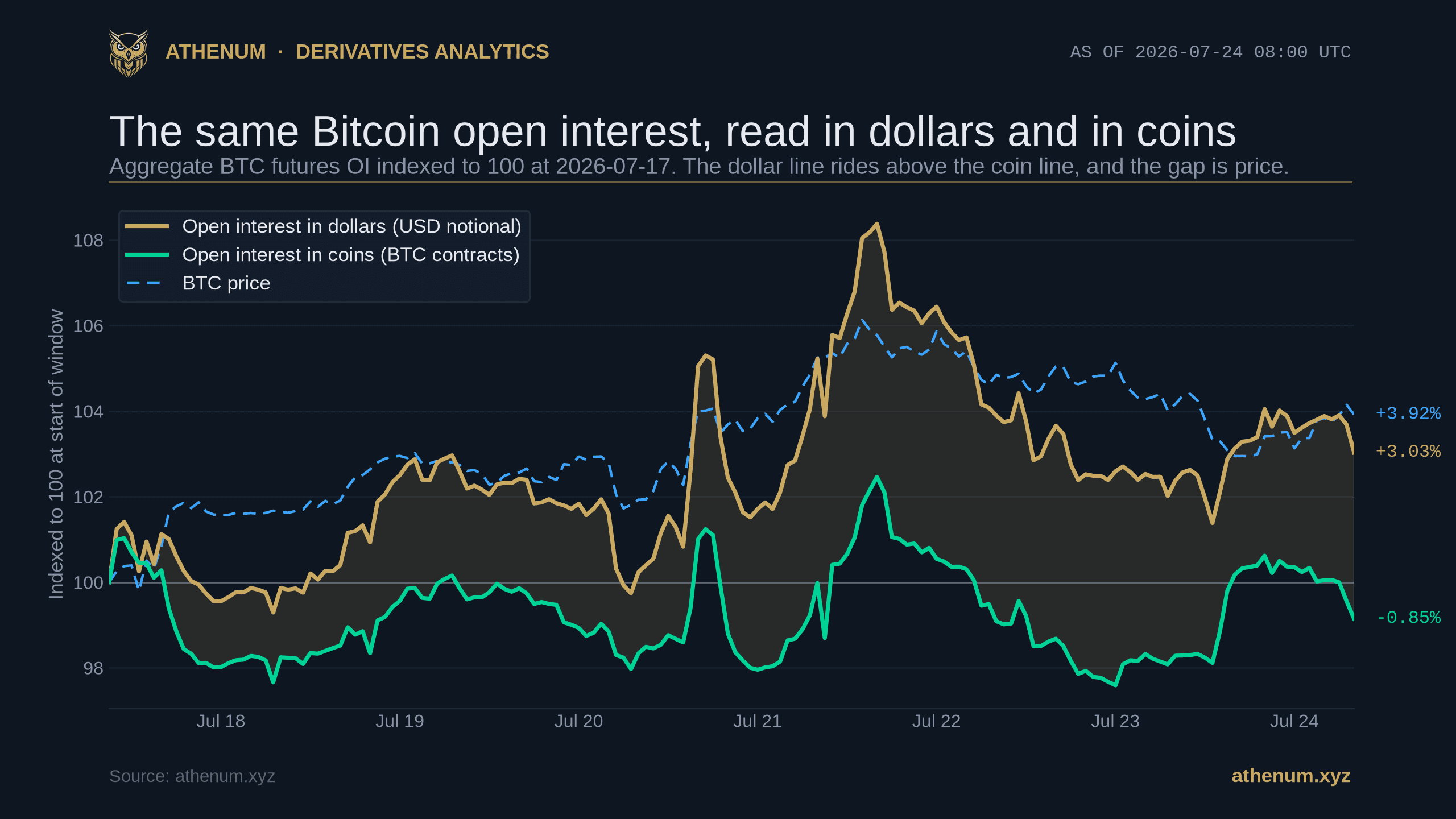
Open Interest tinh bang Coin va Do la: Vi sao cung mot OI crypto co the vua tang vua giam
Open interest crypto duoc yet theo hai cach, theo coin va theo do la, va cung mot OI co the tang o mot ben trong khi giam o ben kia. Day la ly do, tinh tren mot so lieu BTC truc tiep, va nen tin con so nao cho viec gi.
Athenum Analytics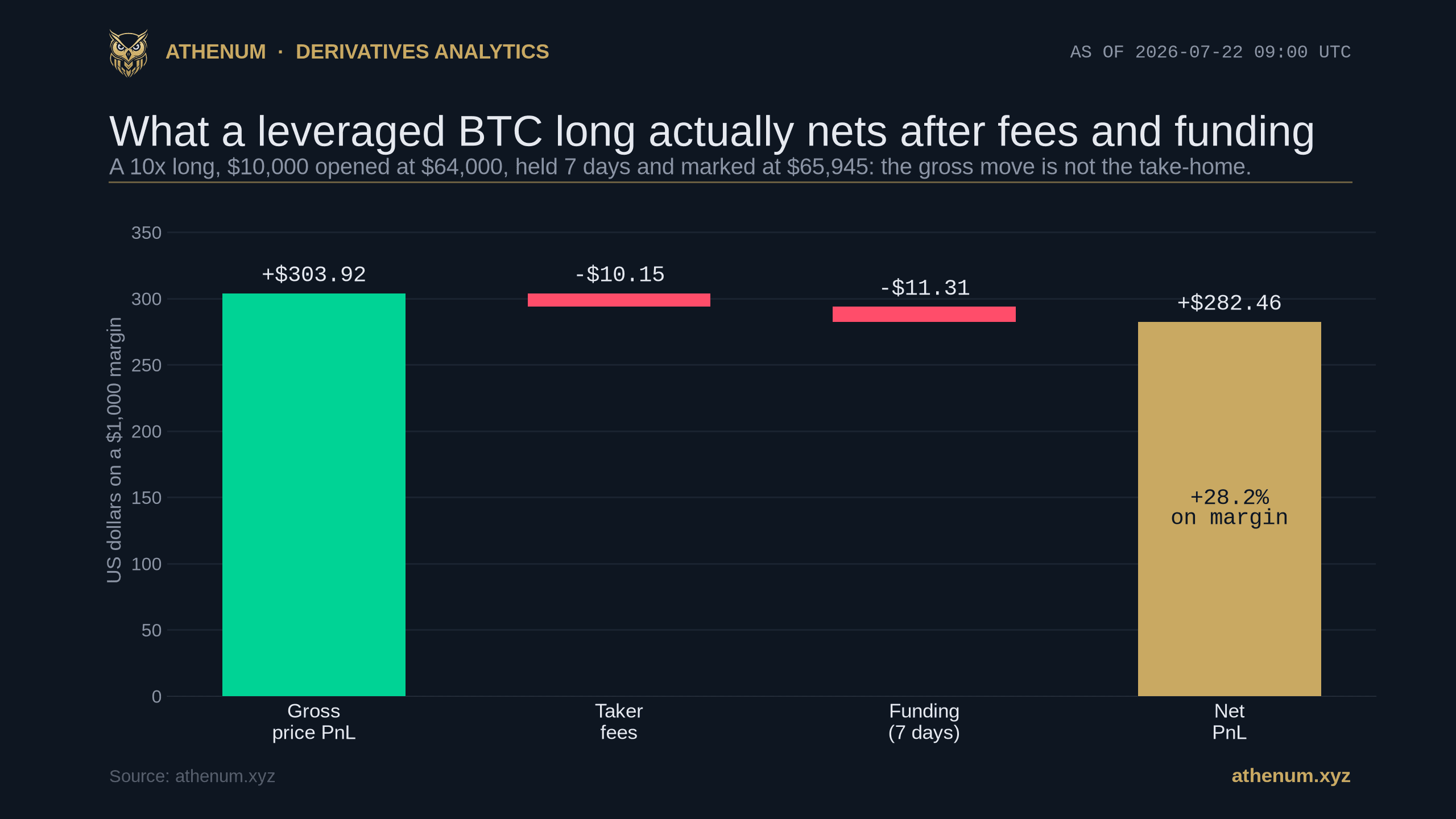
Cách Tính PnL Phái Sinh Crypto: Vào, Ra, Funding và Phí
PnL phái sinh crypto của bạn là bốn thứ, không phải một: hướng và kích thước, biến động giá, phí và funding. Đây là công thức đầy đủ, tính trên một vị thế long BTC trực tiếp, và vì sao funding khác nhau theo sàn.
Athenum Analytics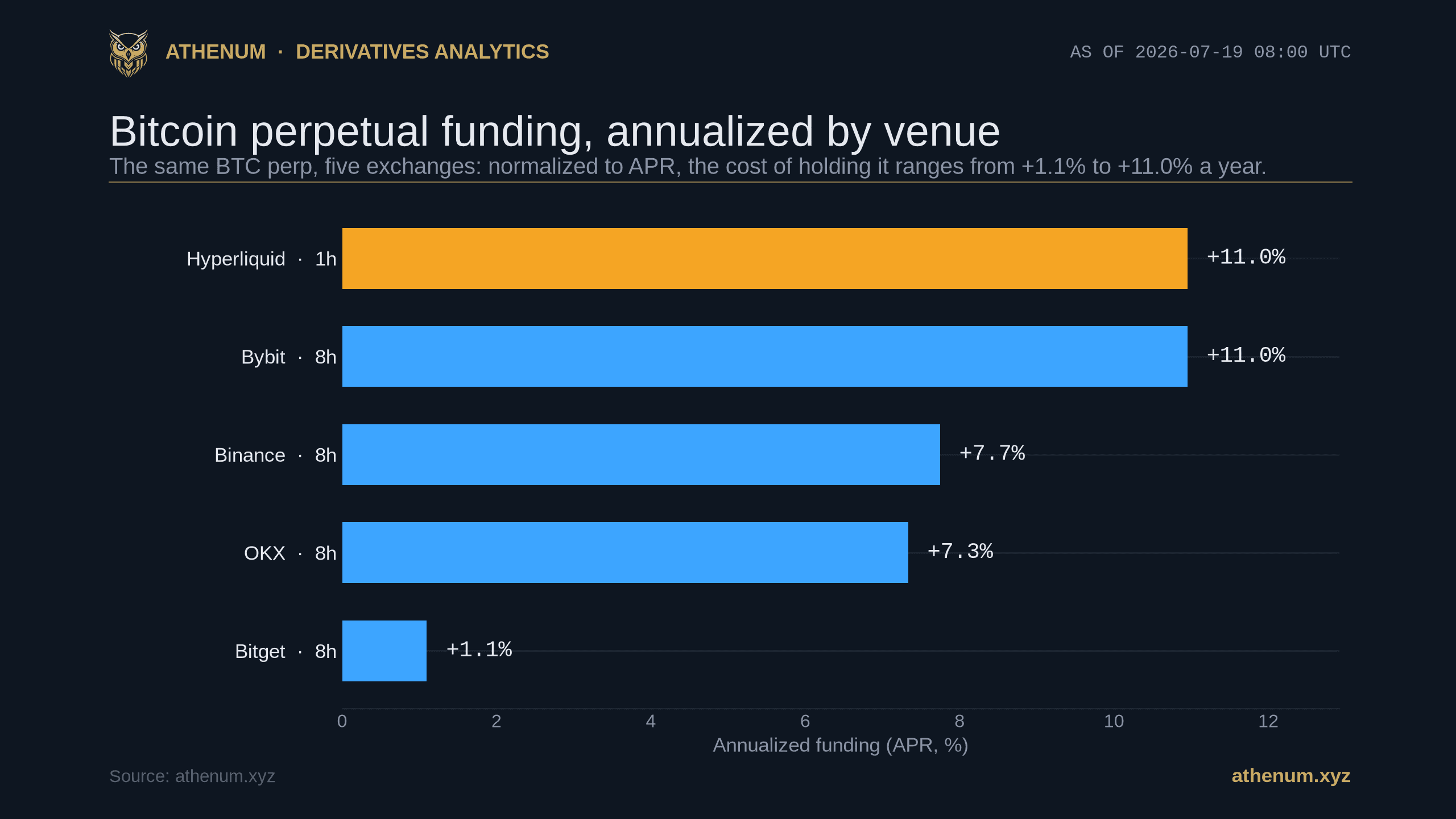
Kỳ Funding: Vì Sao Cùng Một Crypto Perp Lại Trả Khác Nhau Trên Mỗi Sàn
Kỳ funding khác nhau theo sàn: hầu hết crypto perp quyết toán mỗi 8 giờ, một số mỗi giờ. Cách quy funding perp về APR để so sánh các sàn một cách công bằng.
Athenum Analytics