Orderflow measurement: resets, units and information timing
Reconcile CVD resets, estimated delta, base and quote units, delayed trades and unknown classifications using original tapes and timelines.
What you will practise
Determine whether an apparent flow signal survives consistent anchors, units, classification, coverage and information availability.
Before you start
- Reconstruct basic cumulative volume delta from signed trades.
- Distinguish an execution, a candle and an open-interest observation.
Course outline
- 1
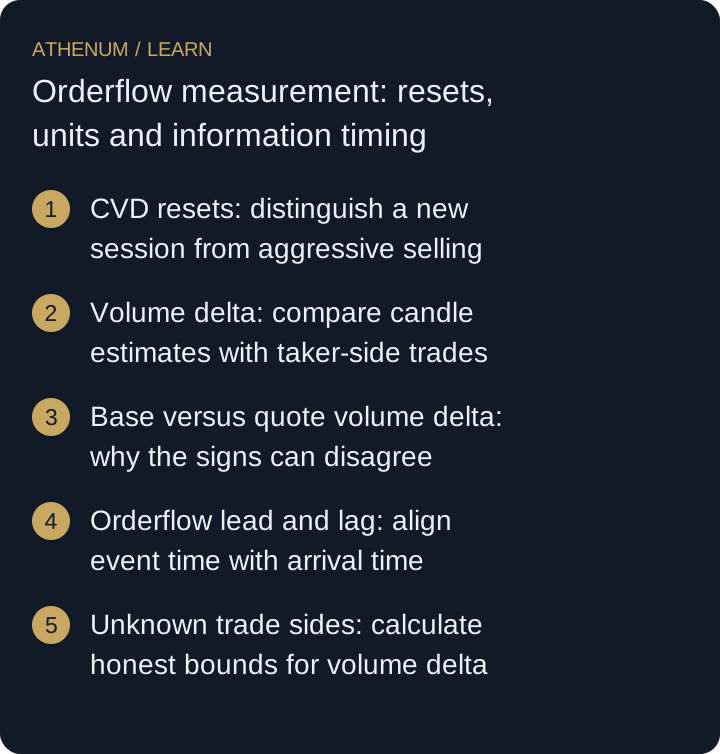
CVD resets: distinguish a new session from aggressive selling
Reconstruct continuous and session-anchored cumulative volume delta from one trade sequence. Explain reset jumps without inventing sell volume.
7 min - 2
Volume delta: compare candle estimates with taker-side trades
Apply two delta classifications to the same constructed market interval. See why a rising candle can contain negative aggressor-side delta.
7 min - 3
Base versus quote volume delta: why the signs can disagree
Calculate signed asset quantity and signed traded value from the same tape. Avoid converting aggregate delta at one closing price.
7 min - 4
Orderflow lead and lag: align event time with arrival time
Replay a delayed trade message without leaking future information into a signal. Separate exchange event time, publication time and local receipt time.
7 min - 5
Unknown trade sides: calculate honest bounds for volume delta
Keep unclassified quantity visible and calculate the strongest buy and sell totals compatible with it. Distinguish unknown side from missing trades.
7 min
 Open full-size diagram
- CVD resets: distinguish a new session from aggressive selling
- Volume delta: compare candle estimates with taker-side trades
- Base versus quote volume delta: why the signs can disagree
- Orderflow lead and lag: align event time with arrival time
- Unknown trade sides: calculate honest bounds for volume delta
Educational material. Examples do not establish a profitable strategy. Trading costs, gaps and liquidation can produce losses beyond a planned stop.