Topic
Education
8 articles
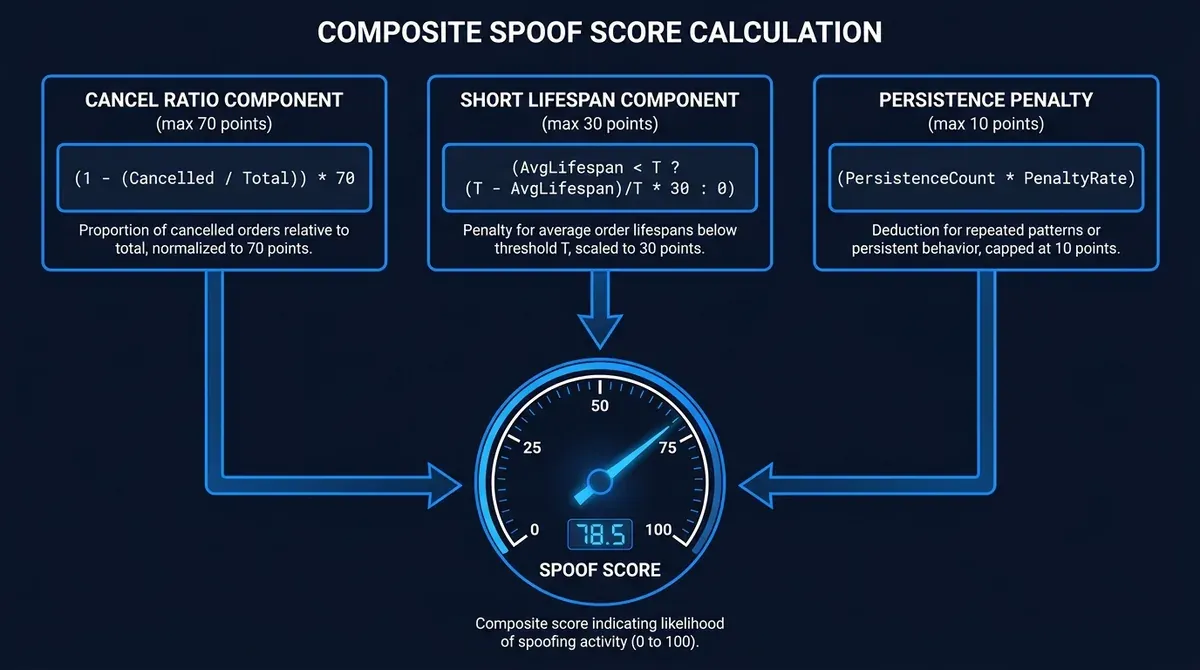
What is a spoof score?
An Athenum-proprietary metric, scored 0 to 100, that quantifies how much of a crypto venue's displayed orderbook depth behaves like spoofing rather than real-money intent.
 Athenum Analytics
10 min
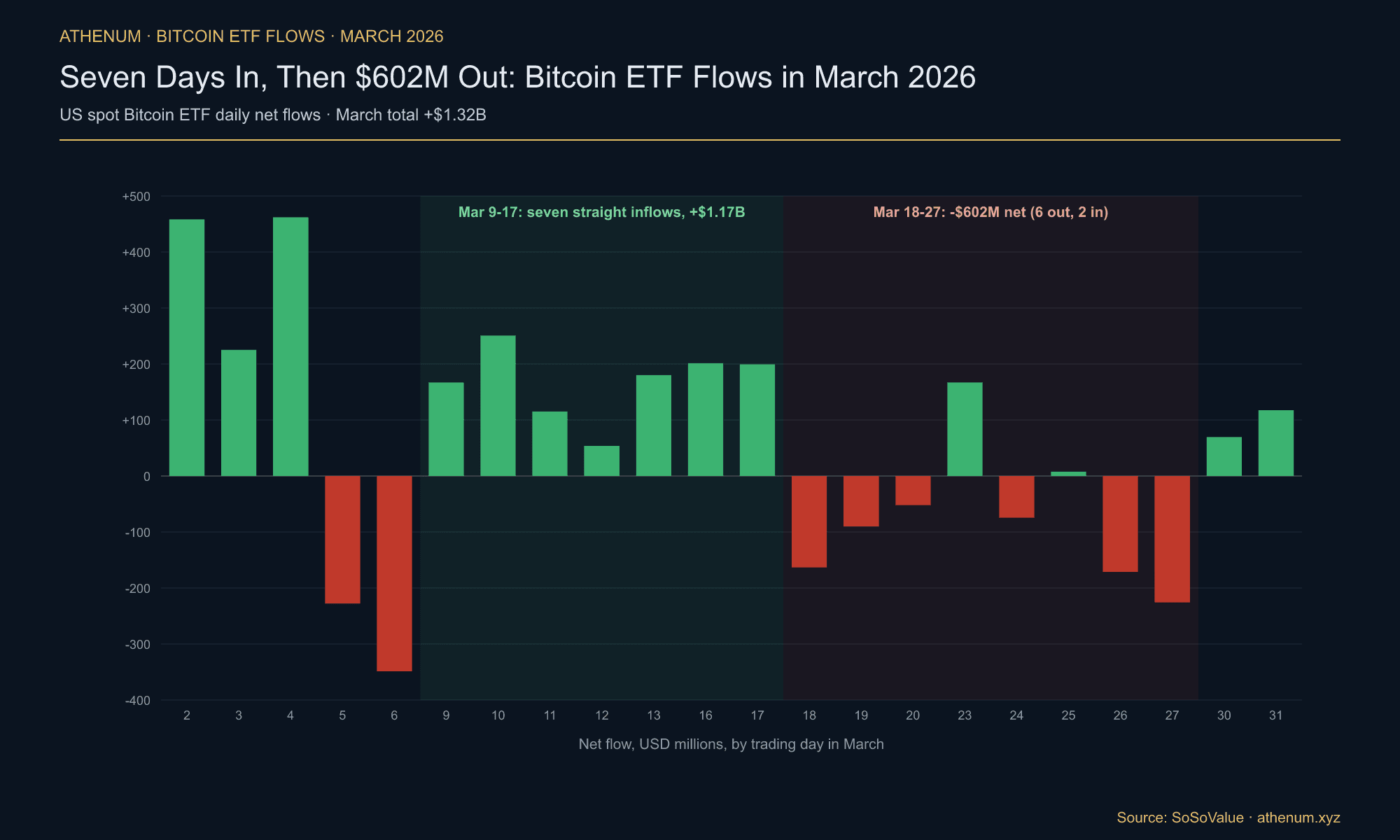
Seven Days In, Then $602M Out: Bitcoin ETF Flows in March 2026
US spot Bitcoin ETFs took in $1.17 billion over seven straight sessions to March 17, 2026, then shed a net $602 million over the eight sessions to the March 27 options expiry. March still ended up $1.32 billion, with 14 inflow days and 8 outflow days (SoSoValue).
Athenum Analytics12 min
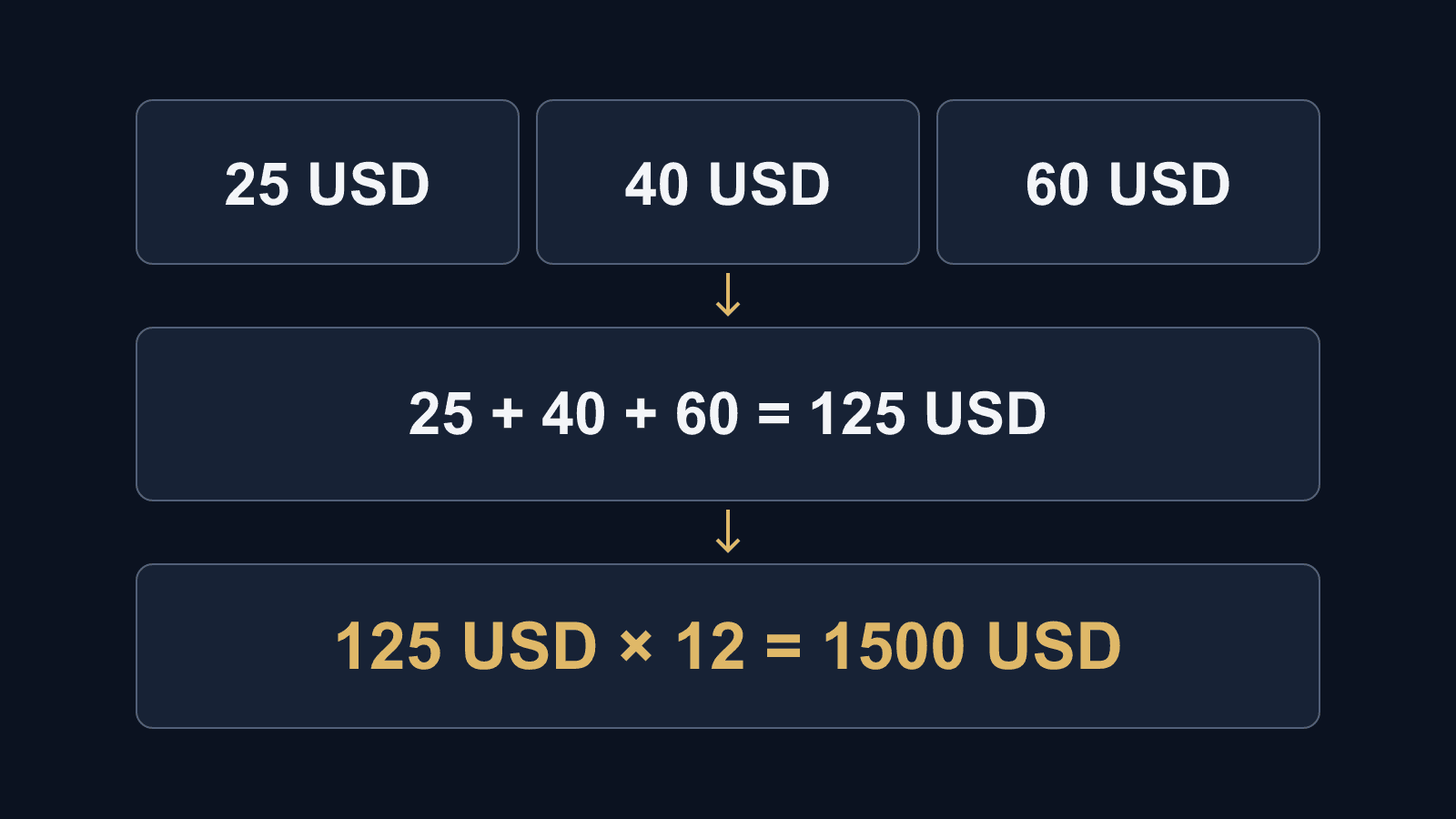
Crypto Analytics Costs: Build a Budget for Your Trading Workflow
Compare subscription terms, data access and overlapping tools. A worked budget separates hypothetical costs from vendor prices and trading returns.
Athenum Analytics3 min

Athenum Weekly Intelligence (March 1 - March 8, 2026)
BTC surged 12.6% to $74K on $1.4B in ETF inflows. Then NFP printed −92,000, oil crossed $100, and the entire rally evaporated. But spot whales are accumulating with 87% bullish conviction while futures whales hedge the opposite way. That divergence is the signal.
Athenum Analytics18 min

How BTC Rallied 11.2% While Markets Burned: Anatomy of the Feb 28 Spring and Mar 2 Breakout
Bitcoin crashed 3.9% when Iran strikes hit on Feb 28. Two days later it was up 11.2%, printing $70,096 while equities bled. This wasn't random. It was a textbook Wyckoff spring. Here's the full breakdown across 10 analytical dimensions.
Athenum Analytics12 min

Athenum Weekly Intelligence (February 22 - February 28, 2026)
Trump's 15% tariff shock triggered $468M in liquidations and a 3% BTC drawdown. But whale walls stacked bids, funding rates turned negative, and institutions broke a five week outflow streak with $560M in fresh ETF inflows. Smart money is buying what retail is selling.
Athenum Analytics13 min

The $19 Billion Lesson: A Complete Guide to Risk Management for Crypto Derivatives Trading
On October 10, 2025, $19 billion in open interest evaporated in 36 hours. Nearly 400,000 traders were liquidated in a single day. Most of them had an edge. What they didn't have was a risk framework built for perpetual futures. This is that framework.
Athenum Analytics20 min
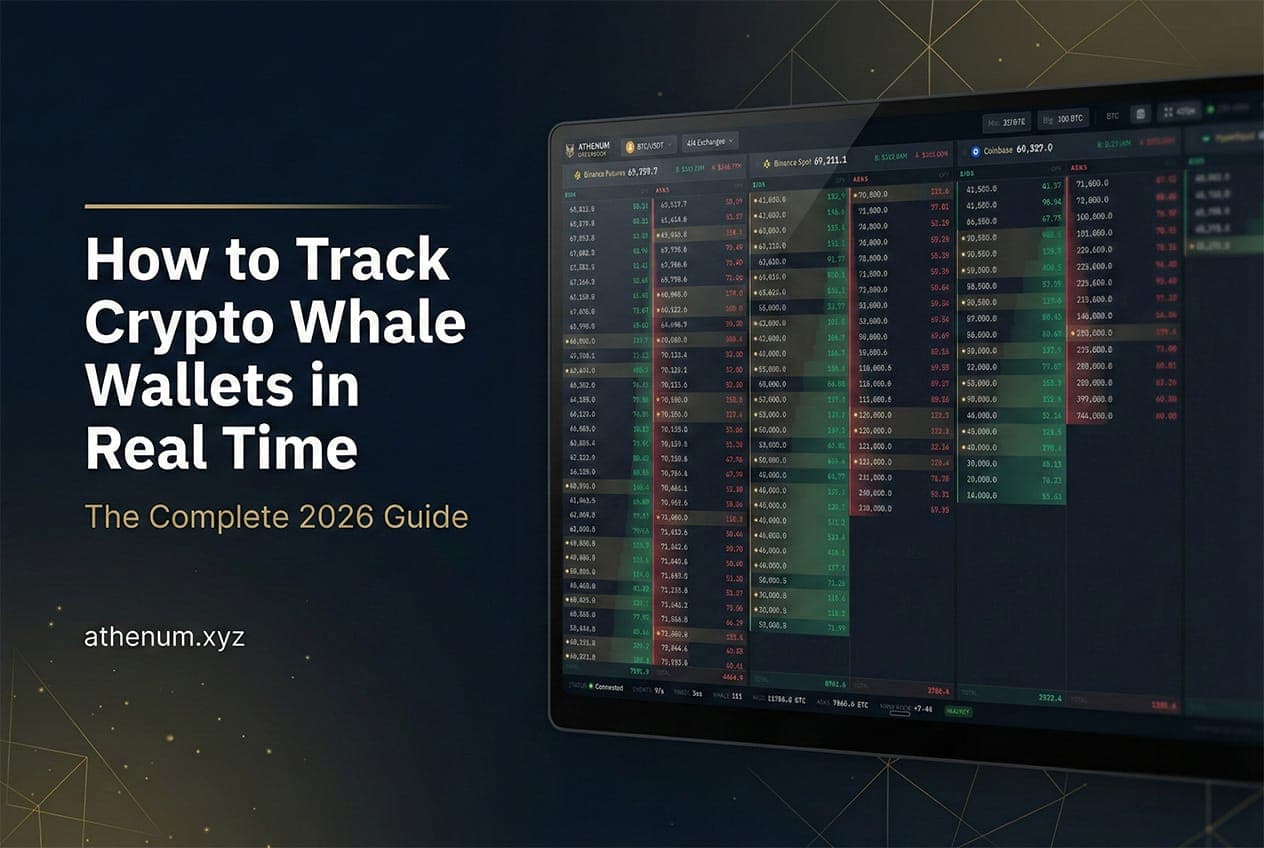
How to Track Crypto Whale Wallets in Real Time: The Complete 2026 Guide
Monitor real-time BTC and ETH whale activity with on-chain analytics and orderbook flow. Spot accumulation, exchange inflows, and distribution as it happens.
Athenum Analytics14 min