Portfolio risk: drawdown, sizing and daily limits · 1 / 5
Drawdown recovery: calculate the return needed to break even
A 25% drawdown needs a 33.33% recovery because the gain starts from a smaller account. The useful calculation is not just the percentage: first establish the equity peak, the valuation convention and whether money entered or left the account.
Athenum7 minUpdated:
Use the same account and denominator
Let H be the previous equity high and E the current equity, measured in the same currency. With no external cash flows, drawdown is d = (H − E) / H. The return needed to regain that high is H / E − 1 = d / (1 − d), provided E is positive. Multiply by 100 to express either number as a percentage. At zero equity the recovery percentage is not finite.
An account balance that excludes open losses can hide a drawdown. Decide whether the curve uses marked equity or closed-trade balance, retain its observation times, and label the result. A daily series can miss a deeper intraday trough. A drawdown statistic describes the measured path, not a hard bound on the next loss.
Treat recovery as arithmetic, not a trading target
A previous peak is an accounting reference. It does not make the next trade more likely to win, nor justify increasing size to get back to even. Reducing exposure can slow a possible recovery while reducing further losses; the appropriate response belongs in a rule specified before the loss, not in the recovery formula.
Keep deposits and withdrawals in a separate ledger. Adding 2,000 USDT to an 8,000-USDT account can restore a 10,000-USDT balance without any trading return. For performance comparisons, calculate returns between external cash flows and chain those subperiod returns rather than crediting deposits as profits.
Worked example: one peak, three different recovery hurdles
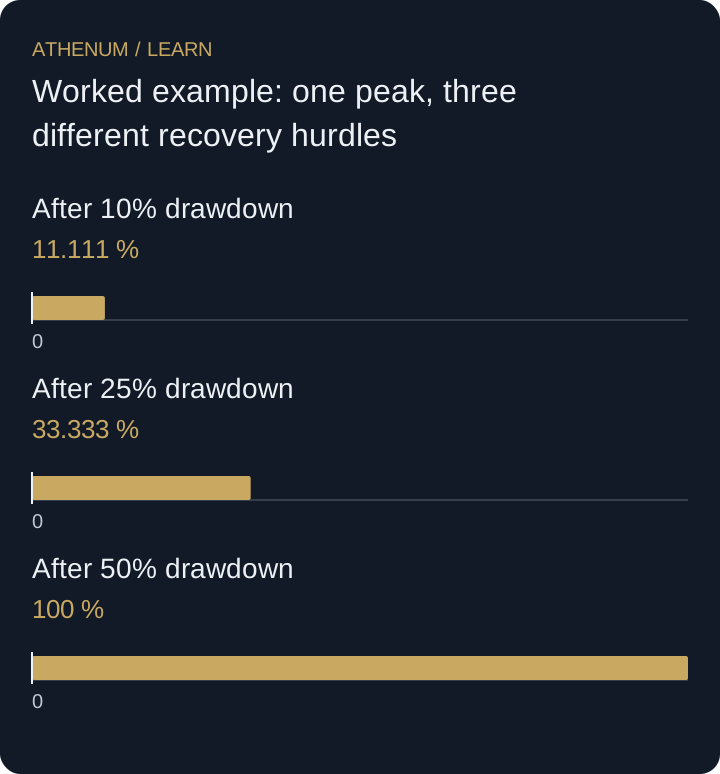
Assume a hypothetical account peaked at 12,000 USDT, with no deposits, withdrawals or additional trading costs outside the reported equity. At 10,800, drawdown is 10%, but the missing 1,200 is 11.111% of remaining equity. At 9,000, a 3,000 recovery needs 33.333%. At 6,000, the required gain is 100%.
The diagram compares required gains on the remaining account, not the likelihood of achieving them. A further 10% loss from 9,000 leaves 8,100: the total drawdown becomes 32.5%, not 35%. Regaining 12,000 now requires approximately 48.148%. Sequential percentages apply to changing denominators.
| Equity (USDT) | Drawdown from 12,000 | Required recovery |
|---|---|---|
| 10,800 | 10% | 11.111% |
| 9,000 | 25% | 33.333% |
| 6,000 | 50% | 100% |
 Open full-size diagram
- After 10% drawdown: 11.111 %
- After 25% drawdown: 33.333 %
- After 50% drawdown: 100 %
A deposit does not repair the strategy
Suppose the 9,000-USDT account receives a 3,000-USDT deposit. Its balance equals the old peak, but its investment loss still exists. Conversely, a withdrawal can make an unadjusted balance curve look worse despite profitable trading. Preserve both the cash ledger and the investment-return curve; do not erase a strategy drawdown by choosing the more flattering display.
Before acting
- Declare marked equity or closed-trade balance and observation frequency.
- Separate external cash flows before comparing performance.
- Calculate loss from peak equity and recovery from remaining equity.
- Keep exposure decisions independent of a desire to regain the old high.
Check your understanding
An account falls from 20,000 to 15,000 USDT, then gains 20% with no cash flows. Has it recovered, and what return is still required?
Show the explained answer
No. The initial drawdown is 25%. A 20% gain on 15,000 produces 18,000, leaving a 10% drawdown from the original peak. The remaining recovery requirement is 2,000 / 18,000 = 11.111%, not 10%.