Portfolio risk: drawdown, sizing and daily limits
Reconcile drawdown recovery, losing streaks, correlated exposure, lagged volatility sizing and daily risk budgets with original worked examples.
What you will practise
Calculate what a new trade adds to account risk and identify where stop plans, historical estimates and accounting conventions can fail.
Before you start
- Calculate linear trade P&L and distinguish notional from loss allowance.
- Understand current equity, stop execution and position-size rounding.
Course outline
- 1
Drawdown recovery: calculate the return needed to break even
Calculate peak-to-trough drawdown and the recovery return on remaining equity. Separate deposits, realized balance and marked account equity.
7 min - 2
Fixed fractional risk: model a losing streak before trading
Compare fixed cash risk with risk recalculated from current equity. Work through compounded losses, size rounding and the limits of idealized stop models.
7 min - 3
Portfolio heat: add correlated positions before sizing a new trade
Calculate combined planned stop risk and a separate joint-shock loss. Avoid treating BTC, ETH and altcoin positions as independent risk budgets.
7 min - 4
Volatility position sizing: stress the lag in an ATR-based rule
Calculate an ATR-based quantity, then stress a volatility jump before the estimate updates. Separate volatility, price direction and stop execution.
7 min - 5
Daily loss limit: reserve open risk before taking another trade
Calculate remaining daily risk from realized losses, open-position exposure and cost reserves. Define the reset time and what happens after a limit breach.
7 min
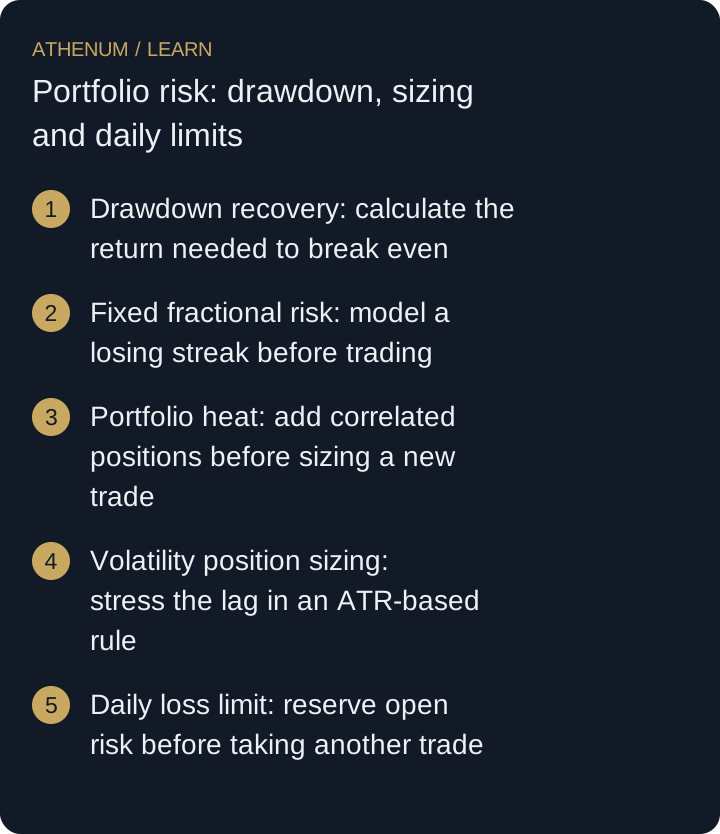 Open full-size diagram
- Drawdown recovery: calculate the return needed to break even
- Fixed fractional risk: model a losing streak before trading
- Portfolio heat: add correlated positions before sizing a new trade
- Volatility position sizing: stress the lag in an ATR-based rule
- Daily loss limit: reserve open risk before taking another trade
Educational material. Examples do not establish a profitable strategy. Trading costs, gaps and liquidation can produce losses beyond a planned stop.