Reconcile margin, collateral and account exposure
Work through inverse P&L, shared-equity stress, conditional collateral deposits, maintenance deductions and marginal collateral bands.
What you will practise
Build a unit-consistent account ledger, identify the assumptions behind its result and explain why it is not a live liquidation forecast.
Before you start
- Distinguish position size, leverage and initial margin.
- Calculate a linear position's price P&L and identify its settlement currency.
Course outline
- 1
Inverse futures P&L: calculate profit and collateral value
Calculate coin-settled futures P&L and account value in USD. Use a worked ledger to separate contract profit from the changing value of collateral.
8 min - 2
Cross margin risk: stress several positions together
Calculate joint position losses, maintenance margin and remaining account equity. Avoid assigning the same shared collateral to several positions twice.
7 min - 3
Margin top-up: calculate eligible collateral after haircuts
Work out how much collateral a hypothetical margin shortfall requires. Include eligibility factors, quantity increments and price changes before crediting.
7 min - 4
Maintenance margin tiers: apply the rate and deduction
Reconcile a progressive maintenance-margin schedule with its rate-minus-deduction formula. Test a tier boundary without inventing a sudden margin cliff.
7 min - 5
Collateral haircuts: calculate tiered credit and liabilities
Calculate recognized collateral across marginal tiers, then subtract liabilities. Distinguish market value from collateral credit and ineligible balances.
7 min
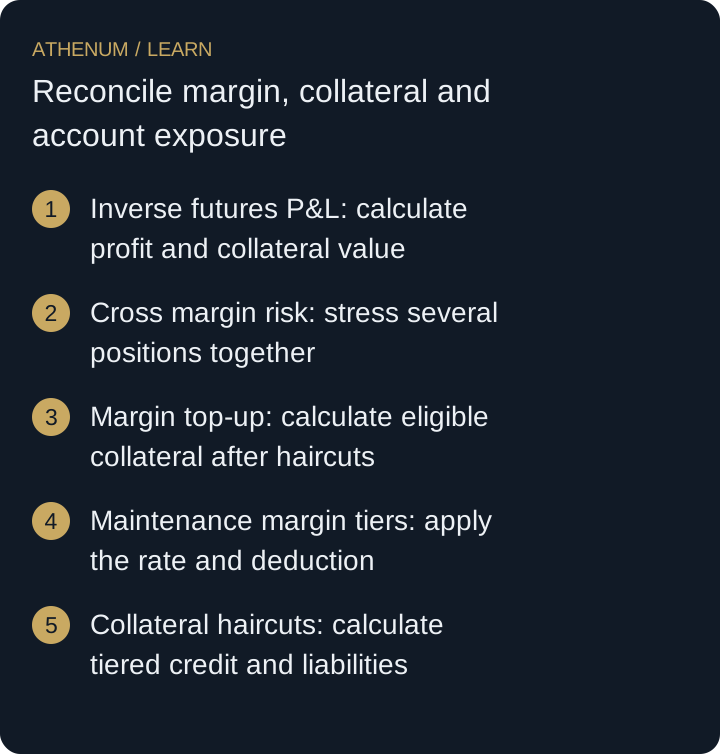 Open full-size diagram
- Inverse futures P&L: calculate profit and collateral value
- Cross margin risk: stress several positions together
- Margin top-up: calculate eligible collateral after haircuts
- Maintenance margin tiers: apply the rate and deduction
- Collateral haircuts: calculate tiered credit and liabilities
Educational material. Examples do not establish a profitable strategy. Trading costs, gaps and liquidation can produce losses beyond a planned stop.